

Findings from the first Community Survey
About the Project
General findings
Daily life
Most people rated their quality of life as good or very good, but still experience regular challenges.
- 29% said accessing public transport is a problem
- 26% said using hands and fingers is a problem
_Page_1%20(2).png)
_Page_2%20(2).png)
For more information click here to download the 2018 Australian Results Infographic
Bladder problems
Problems with the bladder were very common among people with spinal cord injuries.60% had problems.
- 12% had extreme problems
- 34% had an indwelling catheter
- 48% had urinary tract infections
.pdf_Page_1.png)
.pdf_Page_2.png)
Experiencing pain
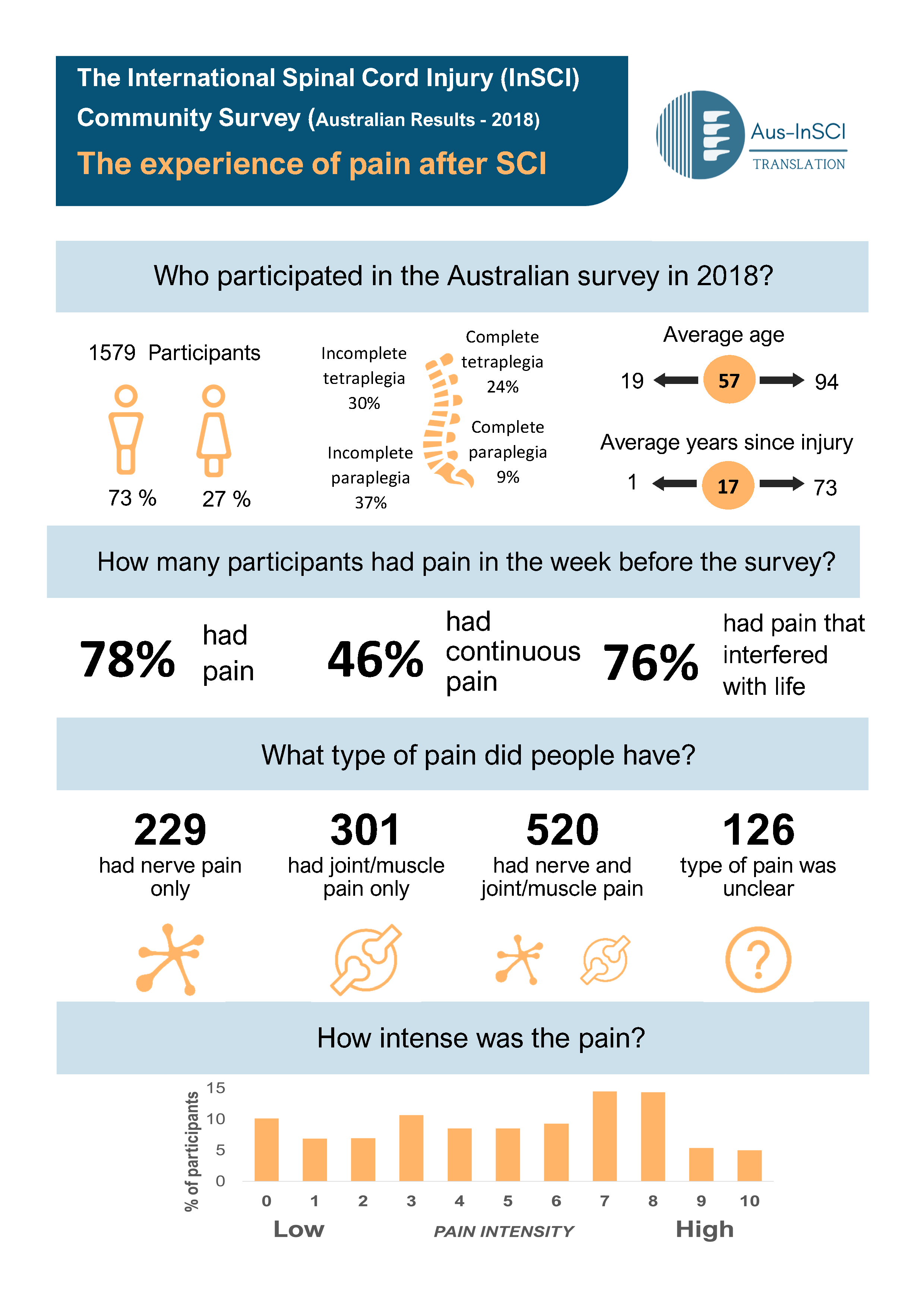
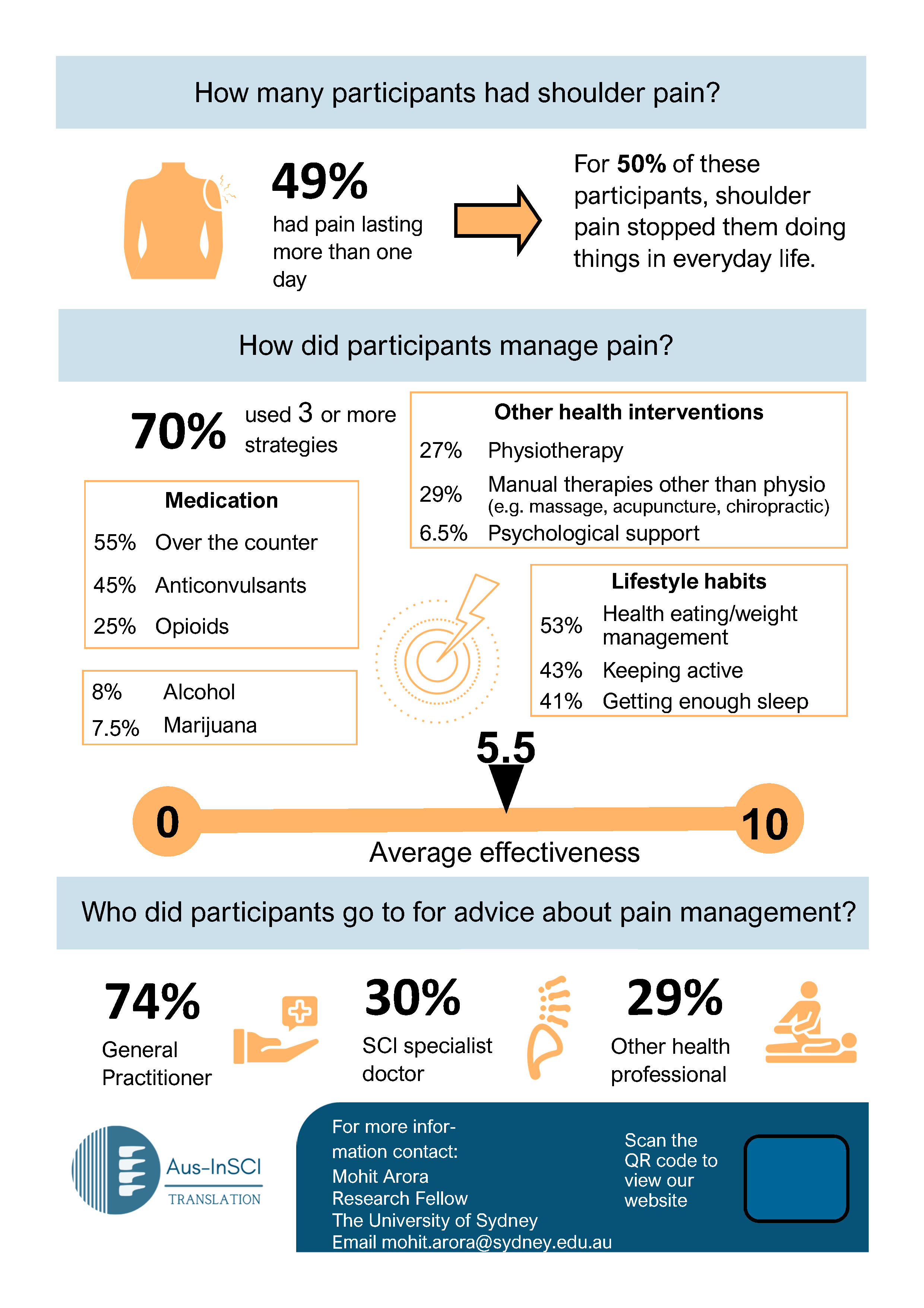
Pain is an ever-present part of the lives of many people with spinal cord injury.
- 46% experience continuous pain
- 41% saw a physio in last 12-months
- 44% had nerve and joint/muscle pain
- 70% use three or more strategies to manage pain
For more information click here to download the Pain after SCI Infographic.
Employment
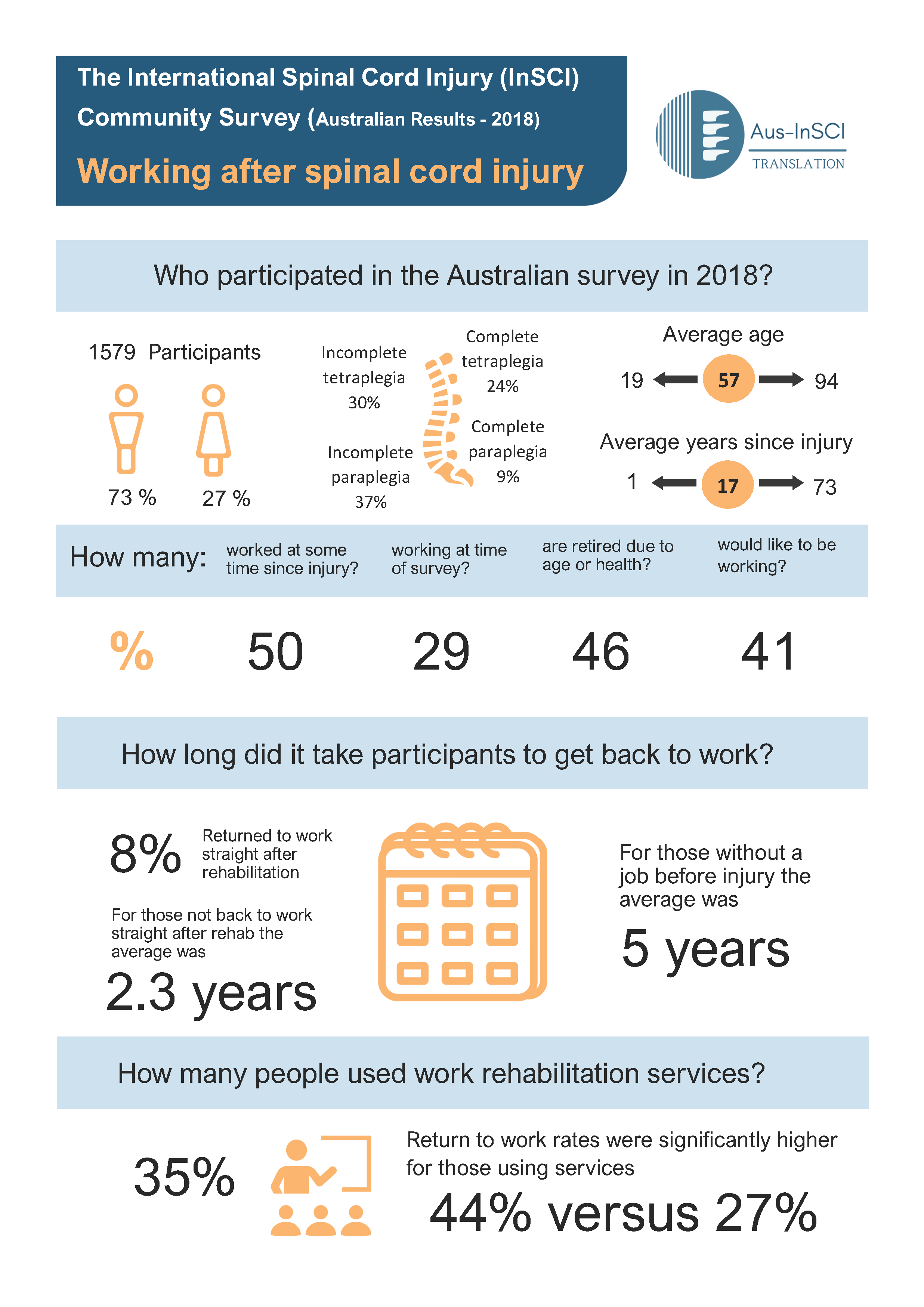
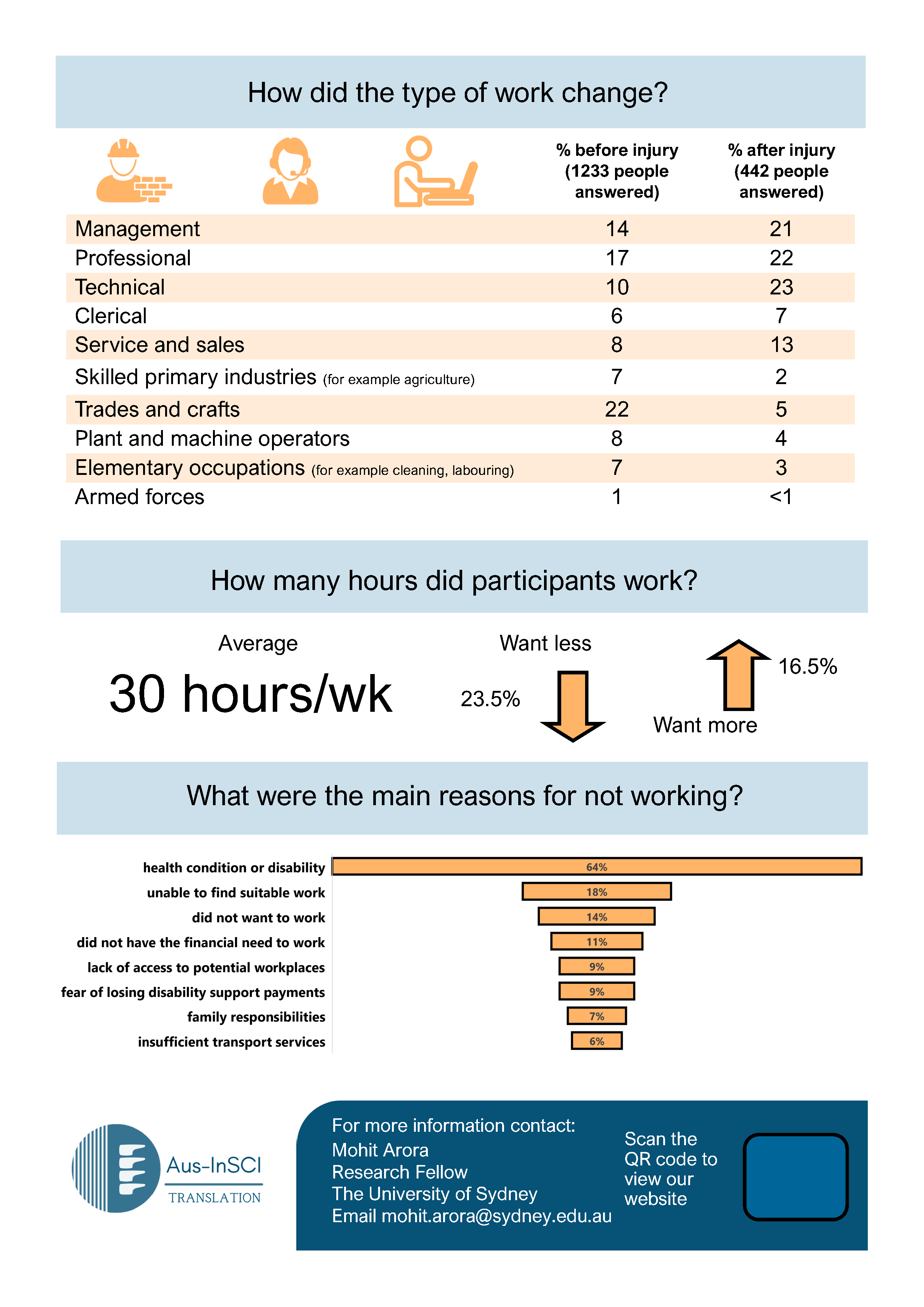
Most people with a spinal cord injury wanted to work, but for some, managing their health and finding suitable work was an overwhelming challenge.
- 50% worked at some point since injury
- It took an average of 2.3 years to get back to work
- 35% used work rehabilitation services
- Participants worked on average 30 hours per week
For more information click here to download the Working after SCI Infographic.
View All Researchers

