

Personalising Your Space: Resources for Patients, Families and Clinicians
The Personalising Your Space resources have been developed as part of The Hopkins Centre Seed Project, If, How and Why Patients Modify and Personalise Their Rooms in Inpatient Neurorehabilitation Environments.
Recovering from neurotrauma can involve spending weeks or months in specialised rehabilitation settings, with patients spending much of their time in their rooms. While research suggests that enriched environments can positively support wellbeing, mood and recovery, less is known about how and why patients personalise or modify their rehabilitation spaces and the difference this can make to their experience.
Led by Kaitlyn Spalding and an interdisciplinary team of researchers, clinicians and health professionals, this project explored how patients in inpatient neurorehabilitation personalise their rooms and the impact these changes can have on their rehabilitation experience. The findings are helping to build understanding of how simple, meaningful changes to a person's environment may contribute to creating more supportive, comfortable and person-centred healthcare spaces.
Project Resources
Personalising Your Space Flyer
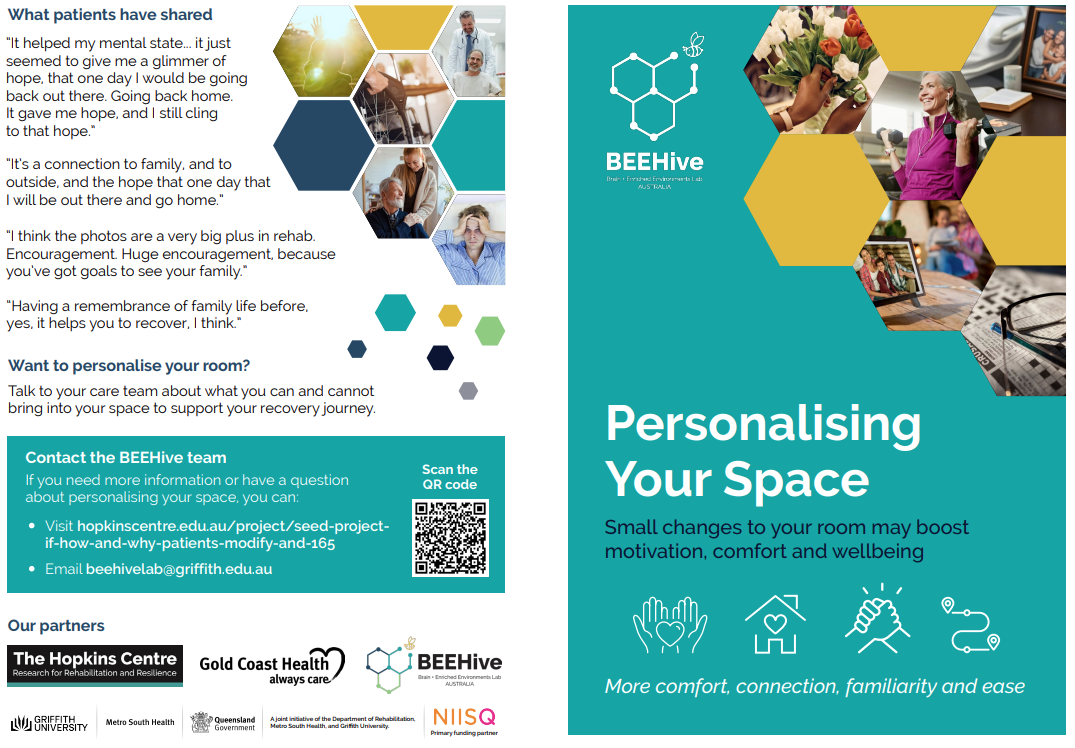
This flyer provides an introduction to the importance of personalising rehabilitation spaces and encourages patients, families and clinicians to consider simple ways to make an inpatient room feel more familiar, comfortable and meaningful.
Click here to view the Personalising Your Space flyer.
Personalising Your Space Project Poster
This project poster provides an overview of the research, including the project's aims, approach and key findings into if, how and why people personalise and modify their rooms during inpatient neurorehabilitation.
Click here to view the Personalising Your Space project poster.
Project Outcomes
The project is contributing to a greater understanding of the important relationship between rehabilitation environments and patient experiences.
- Supporting person-centred rehabilitation environments
The findings highlight the value of recognising the inpatient room as more than simply a clinical space. Opportunities to personalise an environment may help patients create a greater sense of comfort, familiarity and connection during their rehabilitation journey. - Informing patients, families and clinicians
The resources translate project findings into practical information that can support conversations and decision-making around personalising rehabilitation spaces. - Improving the patient experience
By better understanding what people choose to change or bring into their rooms, and why these changes matter to them, healthcare services can identify opportunities to create environments that are more supportive of individual needs and experiences. - Translating research into practice
The project's findings and resources have the potential to be readily shared across rehabilitation and healthcare settings, supporting broader awareness of the role physical environments can play in patient wellbeing and rehabilitation.
Foundation for Future Research
The project provides a foundation for future research into personalised and enriched healthcare environments. The findings may inform future co-designed interventions and research exploring how rehabilitation spaces can better support wellbeing, participation and recovery for people living with neurotrauma.
