

Hopkins SCI research takes the international stage at ISCoS 2026
Hopkins researchers showcased spinal cord injury (SCI) research on the international stage at the 65th International Spinal Cord Society (ISCoS) Annual Scientific Meeting, held from 7–10 October 2026 in Kuala Lumpur, Malaysia.
The international meeting brought together researchers, clinicians, health professionals and people with lived experience from around the world to share new knowledge, innovations and approaches to improving the health, rehabilitation and quality of life of people with SCI.
Representing The Hopkins Centre, Dr Sam Borg, Professor Tim Geraghty, Dr Michaela Filipcikova and Dr Evgeniya Zakharova-Luneva delivered five oral presentations collectively, spanning opioid use after SCI, recovery following pressure injury flap surgery, and translating the priorities of people with SCI into meaningful improvements in research, practice and policy.
Understanding opioid use following spinal cord injury
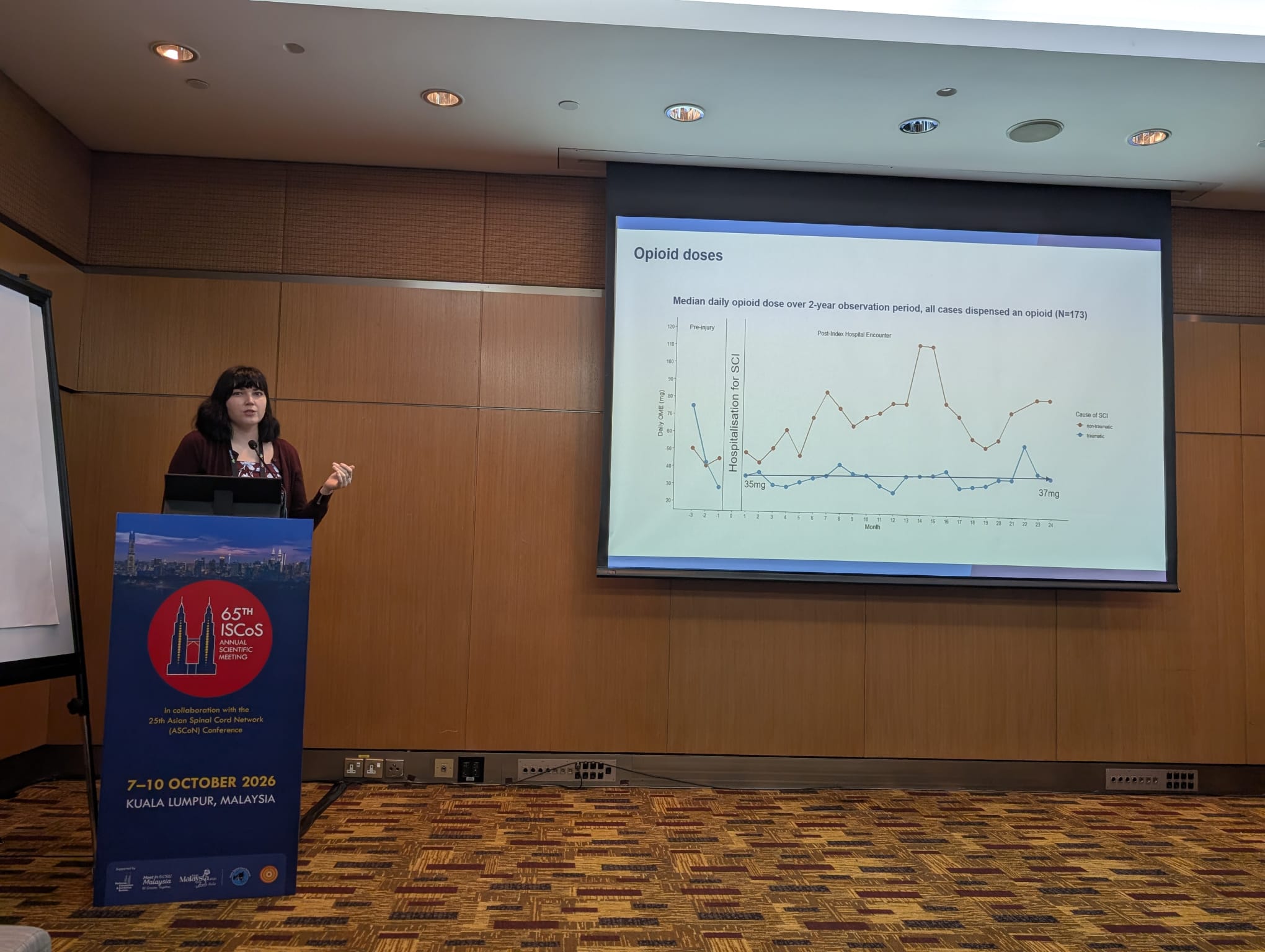
Dr Sam Borg delivered two oral presentations drawing on her PhD research investigating opioid use following SCI in Queensland.
Her first presentation, 'Community opioid dispensing patterns in adults with spinal cord injury in Queensland, Australia: a retrospective data linkage study', examined patterns of community opioid dispensing among adults with SCI.
Sam also presented 'Opioid use following spinal cord injury: a qualitative study involving people with lived experience and healthcare providers in Queensland, Australia'. This work explored perspectives and experiences of opioid use after SCI from both people with lived experience and healthcare providers. 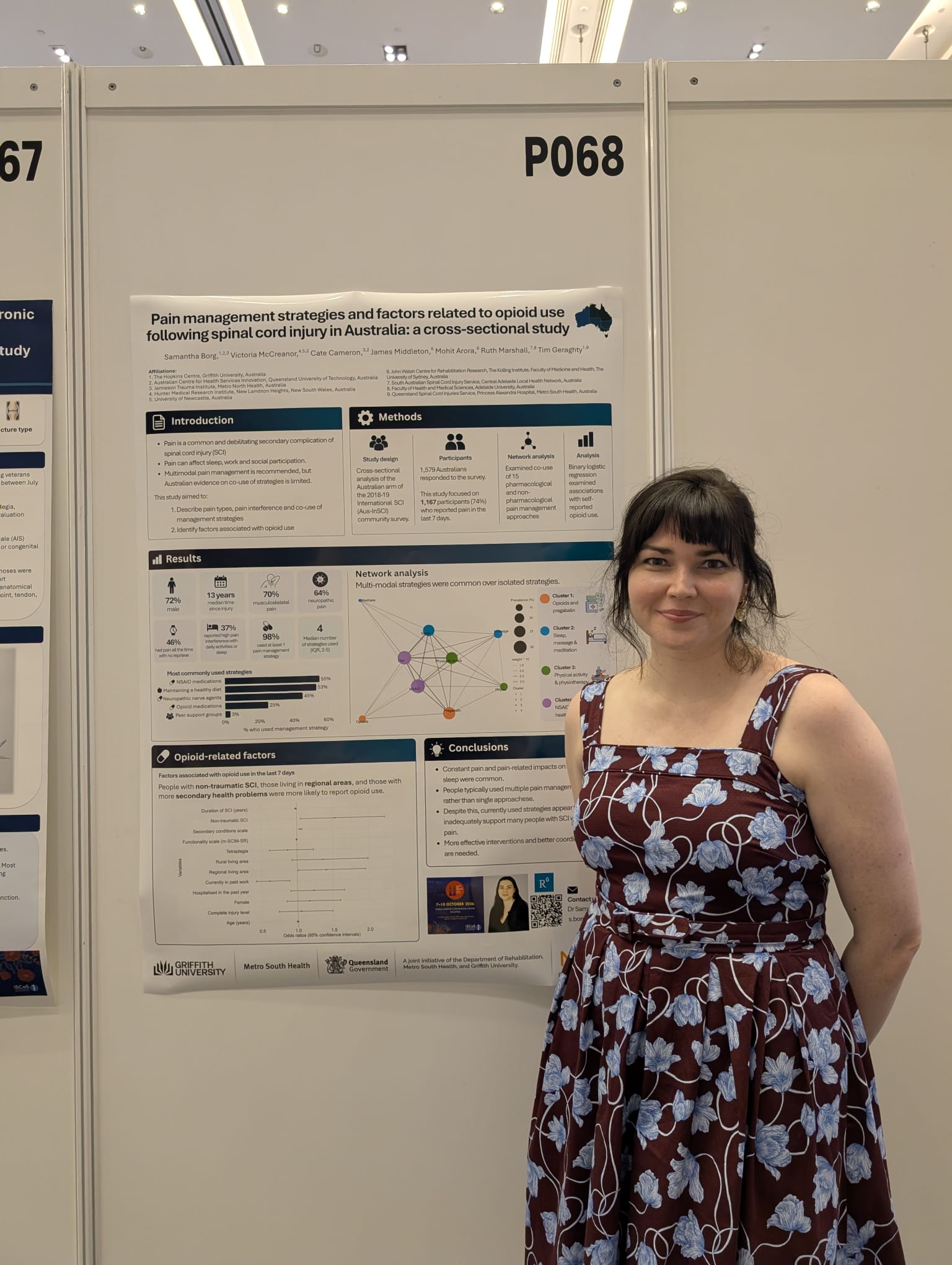
Together, the studies provided important insights into how opioids are used and experienced following SCI and contributed evidence to support safer, more person-centred approaches to pain management.
Improving recovery following pressure injury flap surgery
Professor Tim Geraghty and Dr Evgeniya Zakharova-Luneva shared findings from Hopkins research examining recovery following pressure injury flap surgery for people with SCI/D.
Tim presented 'Lived Experience and Clinician Perspectives on Post-Flap Surgery Recovery in Spinal Cord Injury/Disorder,' highlighting the experiences and perspectives of people with SCI/D and clinicians involved in the recovery journey.
Evgeniya presented 'Postoperative and Rehabilitation Outcomes After Pressure Injury Flap Surgery in Spinal Cord Injury/Disorder,' sharing research examining postoperative and rehabilitation outcomes following pressure injury flap surgery.
Both presentations built on work undertaken through a Hopkins Centre seed grant project focused on complications and recovery following pressure injury flap surgery. By combining clinical evidence with the perspectives of people with lived experience and healthcare professionals, the project has helped identify opportunities to improve care across the surgical and rehabilitation journey.
The research has also contributed to new publications and the development of a co-designed clinical pathway to support the management of pressure injuries requiring surgical reconstruction.
Turning SCI research priorities into action
Dr Michaela Filipcikova presented 'Australian Consensus on Priority Topics for Translating Spinal Cord Injury Research into Practice: Findings from an e-Delphi Study.'
The presentation showcased work from the Aus-InSCI Translation Project, a national initiative focused on turning findings from the Australian arm of the International Spinal Cord Injury Community Survey into practical action.
The e-Delphi study brought together people with lived experience of SCI and professionals working across the SCI sector to identify and reach consensus on priority areas for research translation. These priorities are helping guide efforts to ensure research responds to the issues that matter most to the SCI community and leads to meaningful changes in policy, practice and community support.
Michaela’s research was also featured in a poster at the conference titled ‘Beyond the Aus-InSCI Community Survey: Translating Data into Action with Insights on Employment After SCI' View poster here.
Sharing Hopkins research on the international stage
Together, the five presentations demonstrated the breadth of SCI research being undertaken by Hopkins researchers – from understanding medication use and improving surgical rehabilitation pathways to ensuring the priorities and experiences of people living with SCI inform research and its translation into practice.
Attending ISCoS provided an important opportunity for the Hopkins team to share locally driven research with an international audience, learn from emerging research and practice from around the world, and connect with others working to improve outcomes for people with SCI.
The conference also provided valuable opportunities to strengthen national and international research connections and bring new knowledge, perspectives and ideas back to The Hopkins Centre’s research, clinical and lived experience communities.
Hopkins research by Dr Sam Borg and Dr Michaela Filipcikova was also featured in posters at the conference titled ‘Beyond the Aus-InSCI Community Survey: Translating Data into Action with Insights on Employment After SCI’ (View poster here) and ‘Pain management strategies and factors related to opioid use following spinal cord injury in Australia: a cross-sectional study’ (View poster here).
Conference highlights and key takeaways
Sam Borg: "My key takeaway from the conference was just how connected all our areas of research and clinical practice are. My focus on pain and opioids sparked conversations about employment, rehabilitation timelines and sleep, highlighting how much these areas overlap. It was a good reminder not to become too focused on our individual research areas, but to step back and consider the bigger picture about the person as a whole and how all these factors shape their lives."
Tags: ISCoS, Spinal Cord Injury, Research Translation
Related Articles
- World-leading centre for rehabilitation and disability research opens
- Making breathing easier for patients with acute spinal cord injury
- Singing as a form of rehabilitation
- Congratulations to Award winners
- Spinal Cord Injury Management Course - POSTPONED

