

SEED PROJECT: Development of the ROBIN (Returning hOme after Brain INjury) smart device application
About the Project
About
Current inpatient acquired brain injury (ABI) rehabilitation focuses on discharge (i.e. what the person needs to be able to do safely to leave hospital) rather than a focus on transition (i.e. what the person needs to be able to do when they get home). This results in people experiencing unexpected difficulties once they return home. A previous research project, completed by members of the research team, used a co-design approach in collaboration with people with ABI, support people, health professionals, and technology designers to develop a concept for a technological solution to assist with this transition. The current project progresses this work to turn the concept into a smart device application that can be user tested in a clinical setting.
Aim and objective
The aim of this project is to develop, and user test, a workable co-designed smart device application to assist with the transition to home following acquired brain injury (ABI) rehabilitation.
Project Summary: Status, Outcomes, Impact & Key Results
- Project used a co-design approach to develop a prototype technological solution to support the transition home from inpatient ABI rehabilitation and will ensure that the technology will not be “left on the shelf” and will be something that is wanted, needed, and used by people with brain injury.
- Four co-design workshops were conducted with a range of participants, exploring the experiences and challenges of people with ABI transitioning home, prioritising unmet needs and identifying what may be suitable for a technological solution
- Researchers, participants and designers, co-designed and tested phototype digital solutions
- Results centred around four key areas, home is a different planet to hospital, consideration of unique individual needs, importance of realistic exposure, and tailored digital technology
- Project presented at BIBS25 Symposium - view presentation and further findings here
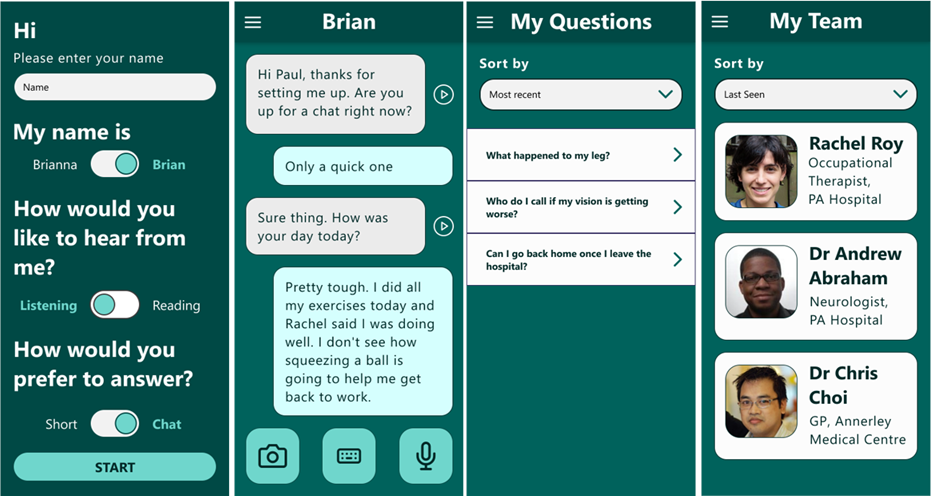
- An iOS smart device application developed - see wireframe prototype mockup images below
- A publication from this study was produced: Hodson, T., Gustafsson, L., Shirota, C., Brough, R., Thompson, A., Geraghty, T., & Torrisi‑Steele, G. (2025). ‘I went home not feeling prepared from the outset’: Describing the co‑design of a technological solution to address gaps in the transition from hospital to home for people with acquired brain injury. Brain Impairment, 26(4), IB25006. https://doi.org/10.1071/IB25006
- Application is being tested for acceptability and feasibility by the completion of the project, ready for testing on a wider scale.
This project is currently recruiting for participants:
Help us test a new app for life after brain injury! .png)
Researchers from The Hopkins Centre and Griffith University are seeking participants to help pilot ROBIN, a newly co-designed smartphone app to support people returning home after a brain injury.
We are currently looking for:
Adults (18+) who have experienced an acquired brain injury in the last 10 years (Note: You must have an Apple iPhone or iPad to participate).
And their formal or informal support people (note: people with a brain injury are welcome to participate on their own - you do not need to have a support person sign up to take part).
Participants will be asked to trial the app for one month and share their feedback.
To read the full details about what is involved and to express your interest, please click the link below: https://www151.griffith.edu.au/redcap/surveys/?s=RXT8XYNFADJFLERT
(Griffith University Ethics Approval: GU Ref 2026/0197)
People/organisations involved
- The Hopkins Centre
- Griffith University
- Metro South Health
Figue 1: Prototype 1
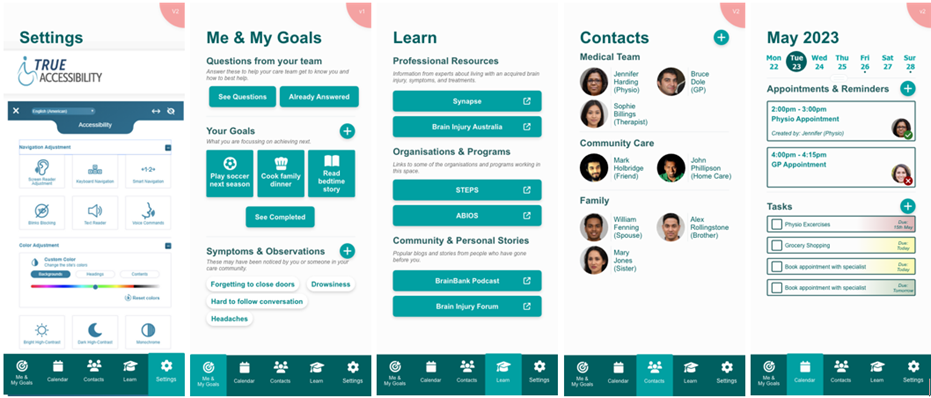
Figure 2: Prototype 2 – Person with ABI View
Publications
Hodson, T., Gustafsson, L., Shirota, C., Brough, R., Thompson, A., Geraghty, T., & Torrisi‑Steele, G. (2025). ‘I went home not feeling prepared from the outset’: Describing the co‑design of a technological solution to address gaps in the transition from hospital to home for people with acquired brain injury. Brain Impairment, 26(4), IB25006. https://doi.org/10.1071/IB25006
View All Researchers
Researchers

Professor
