

Empowering Choice After Brain Injury: Meet the Researchers Behind MYSAY
The Hopkins Centre is pleased to welcome Nadia Turner, Senior Social Worker with the Acquired Brain Injury Transitional Rehabilitation Service (ABI TRS), who has recently joined the research team working on the 'Facilitating Choice and Agency When Cognition is Compromised' project.
The project is exploring how people with acquired brain injury (ABI) can be better supported to have a say in their care, make informed choices and navigate health, rehabilitation and community services.
Supporting people to have a say in their care
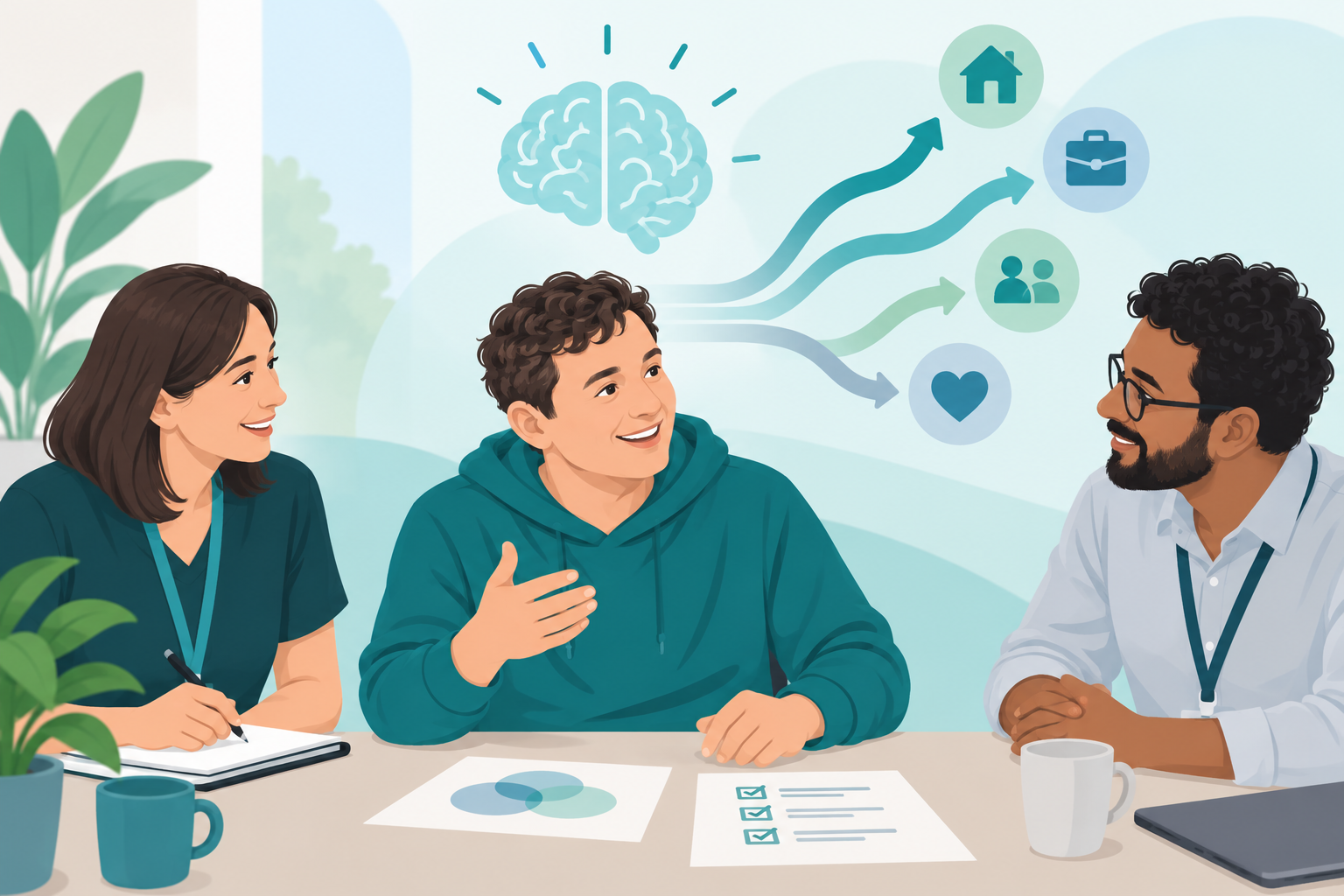
Following an acquired brain injury, changes to memory, communication, planning and emotional regulation can make it more difficult for people to understand their options, communicate their needs and navigate complex health and disability systems. These challenges can be particularly significant during the transition from hospital back into the community.
The project is evaluating MYSAY (MY Self-AdvocacY), a program designed to help people with ABI rebuild their confidence and develop practical skills to actively participate in decisions about their care.
Through a pilot randomised controlled trial, researchers will examine whether MYSAY is practical and acceptable to deliver within existing rehabilitation services and whether it can improve self-advocacy, self-management, self-awareness, emotional wellbeing and people's ability to overcome barriers when navigating services.
Nadia brings valuable frontline clinical experience to the project through her role as a Senior Social Worker with ABI TRS. Her experience supporting people with ABI and their families as they transition from hospital into everyday life will contribute an important clinical perspective to research focused on strengthening choice, agency and participation throughout rehabilitation.
A multidisciplinary research team
Nadia joins a broad team bringing together expertise in rehabilitation, brain injury, psychology, allied health, service delivery and lived experience.
The project is led by Professor Timothy Geraghty, Director of The Hopkins Centre, alongside researchers and clinicians including Professor Tamara Ownsworth, Dr Jessie Mitchell, Dr Kerrin Watter, Dr Melissa Kendall, Areti Kennedy, Dr Annerley Bates, Dr Ryan Bell, Dr Kelsey Chapman, Dr Rachel Brough, Janelle Griffin, Val Pick, Courtney Carlson, Clare Morgan and Sue Wright. Importantly, Karen Hannah, Consumer Advocate, and David Curry, Consumer Self-Advocate, bring lived experience perspectives to the research.
The team's varied expertise is particularly important for a project focused on the real-world challenges of moving between hospital, rehabilitation and community services.
From research into practice
The project will run from January 2026 to December 2027, with participant recruitment through Metro South Health's Brain Injury Rehabilitation Service. Participants will take part in the six-month MYSAY intervention or receive usual care, with outcomes assessed over the course of the study.
Alongside evaluating the program, the project is expected to produce practical resources, including a how-to guide for people with ABI and their families and a clinician training manual to support future implementation. Ultimately, the research aims to support smoother transitions from hospital to home, strengthen person-centred care and shared decision-making, and improve longer-term outcomes for people living with ABI.
The project is funded through the 2026 Metro South Health Research Support Scheme (MSH SERTA) and brings together The Hopkins Centre, Griffith University and Metro South Health.
Tags: MYSAY, Brain Injury, Self Advocacy, Choice, Support
Related Articles
- World-leading centre for rehabilitation and disability research opens
- Improving the ability of employers to communicate with brain injured workers
- THC Researcher awarded GU New Researcher Grant for study in social and emotional wellbeing
- Implementing and sustaining practice change in disability and rehabilitation support systems
- This week is Brain Injury Awareness Week #BIAW20
