

BIAW 2026 - Returning to Driving After Brain Injury: From Research to Real-World Journeys
For many people, driving is about much more than getting from A to B. A driver’s licence can mean independence, employment, social connection and the freedom to participate in everyday life. Following a brain injury, however, changes to attention, memory, vision, reaction time, planning and judgement can make returning to driving complex.
This Brain Injury Awareness Week 2026, The Hopkins Centre is showcasing our research that is helping to better understand and support this important part of life after brain injury.
Building the evidence
The research journey began with projects exploring the impact of driving disruption on people living with acquired brain injury (ABI). Community Access and Participation Following Acquired Brain Injury (ROAMM) investigated how driving status and occupational therapy driving assessment relate to people’s community participation and psychological wellbeing.
This work was followed by Driving Disruption Interventions for Acquired Brain Injuries in the Community-Based Rehabilitation Setting, which examined ways rehabilitation services could support people while they are unable to drive and working towards their return-to-driving goals. .png)
Research has also highlighted the importance of alternatives when returning to driving is not immediately possible. The Navigating Rail Transport After Acquired Brain Injury project explored the experiences and challenges people with ABI face when using public transport, helping researchers understand how transport environments can support continued community participation.
Together, these projects have helped build a more complete picture of return to driving: one that considers not only whether someone can drive, but how driving connects to independence, wellbeing and participation.
Taking driving research into the simulator
This research has helped pave the way for Simulated Driving, Real Journeys, a current Hopkins Centre seed project led by Dr Louise Bassingthwaighte.
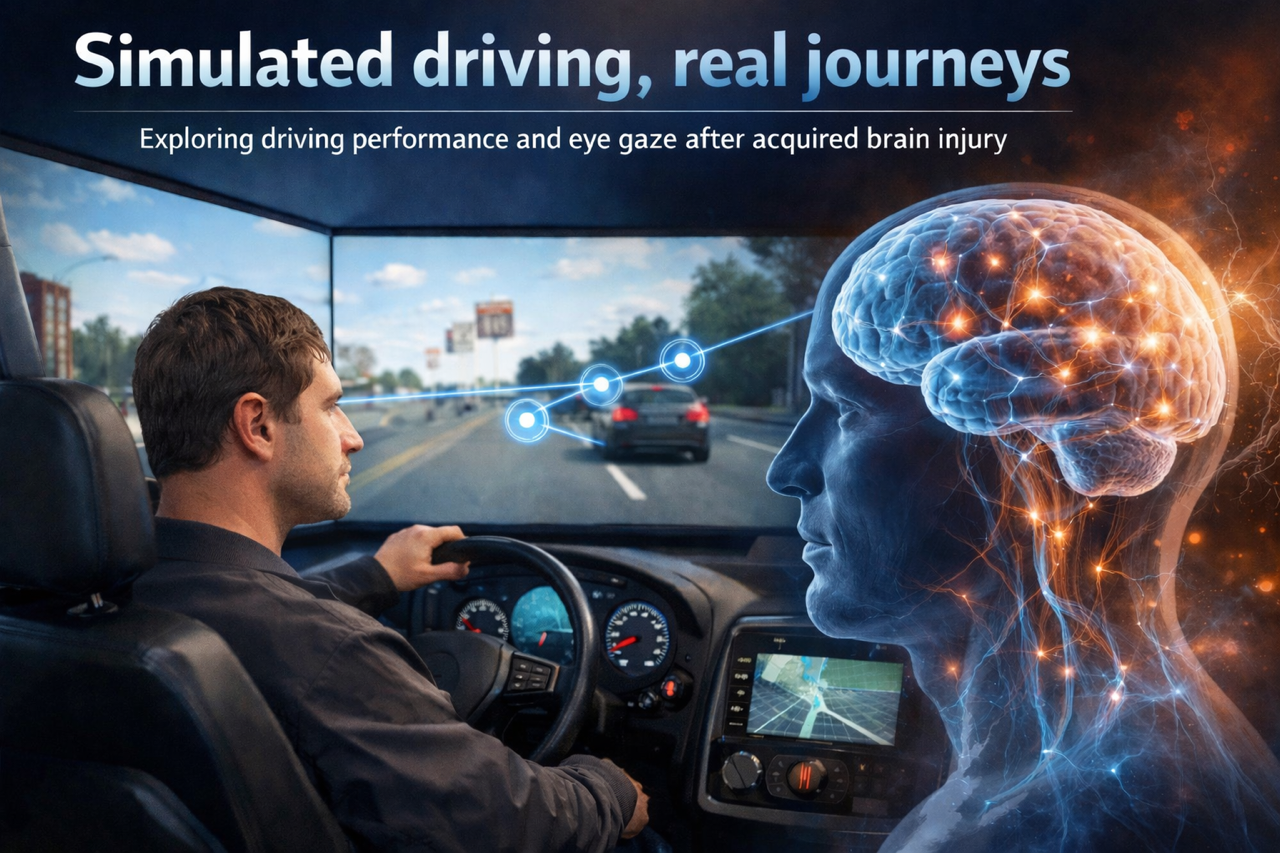
The project is exploring how people with ABI who are preparing to return to driving perform in a driving simulator, compared with people who have already returned to driving and people without brain injury. Researchers will look beyond driving performance alone, examining gaze behaviour and visual scanning to better understand how drivers with ABI process and respond to their environment.
Driving simulation could offer a safe and controlled way to explore challenging situations and provide opportunities for targeted practice. The project will also investigate whether people with ABI find simulator-based rehabilitation acceptable and useful, with the longer-term aim of informing future rehabilitation approaches.
Looking to the road ahead
The future of return-to-driving rehabilitation could be increasingly personalised and technology-enabled, combining approaches such as driving simulation, eye-tracking, virtual reality and on-road assessment.
Importantly, the goal is not simply to get more people back behind the wheel. It is to support people with brain injury to achieve the independence, safety and community participation that matters to them, whether that means returning to driving or finding alternative ways to stay connected.
From understanding the impact of driving disruption, to exploring rehabilitation and alternative transport, and now investigating simulated driving, The Hopkins Centre’s research demonstrates how research can build over time to address real-world challenges.
This Brain Injury Awareness Week, we celebrate research that helps people move forward after brain injury – towards greater independence, participation and the journeys that matter most.
Tags: BIAW, Brain Injury, Driving
Related Articles
- World-leading centre for rehabilitation and disability research opens
- Improving the ability of employers to communicate with brain injured workers
- THC Researcher awarded GU New Researcher Grant for study in social and emotional wellbeing
- This week is Brain Injury Awareness Week #BIAW20
- THC Ambassadors share their experiences this Brain Injury Awareness Week
