

Improving Life After Brain Injury: Hopkins Research in Action for Brain Injury Awareness Week 2026
17 – 23 August 2026
Each year, Brain Injury Awareness Week shines a light on the experiences of people living with brain injury and the challenges they face every day. It is also an opportunity to celebrate the research, innovation and partnerships helping to improve rehabilitation, participation and quality of life. 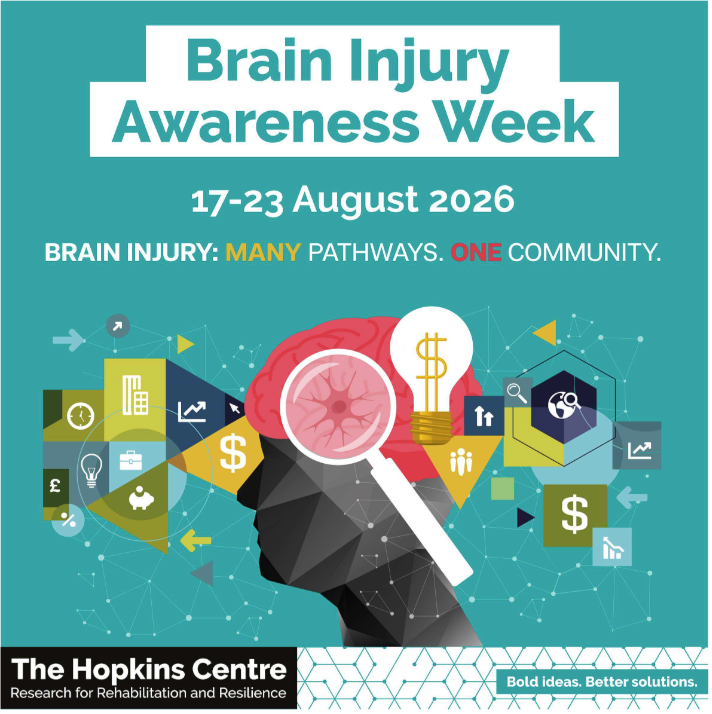
The theme for this year is: Brain injury: many pathways, one community.
This year’s theme highlights that no two brain injuries are the same and bring uniqueness and individuality to each person’s journey. Brain injury can happen and change the lives of many in so multiple ways, and the recovery, support and daily life can look different from one person to another.
At The Hopkins Centre, researchers are working alongside people with lived experience, families, clinicians and community partners to address some of the most important issues facing people after brain injury. From managing fatigue and returning to driving, to improving rehabilitation environments and strengthening social connections, our research is focused on creating practical solutions that make a real difference.
Understanding and Managing the Hidden Impact of Fatigue
For many people, fatigue is one of the most challenging and least understood consequences of brain injury. It can affect concentration, work, relationships and participation in everyday activities long after physical recovery.
The Hopkins Centre is leading new research to improve how fatigue is recognised and managed following traumatic brain injury. Through a collaborative project involving researchers, clinicians, people with lived experience and family members, the team is co-designing practical resources and developing a world-first consensus statement to guide best-practice fatigue management. The goal is to improve understanding, support self-management and help people navigate the ongoing impacts of fatigue with greater confidence.
View project: Fatigue management following traumatic brain injury: co-development of a consensus statement and practical resources
Supporting the Journey Back to Driving
Driving is often closely linked to independence, employment, social participation and community connection. Following a brain injury, returning to driving can be a complex process requiring careful assessment and rehabilitation.
Several Hopkins Centre projects are exploring how technology and innovative assessment approaches can support safe return-to-driving pathways. Current research is investigating driving performance, gaze behaviour and community-based interventions designed to help people regain confidence and independence while maintaining safety on the road.
View project: Simulated driving, real journeys: Exploring driving performance and gaze behaviour following acquired brain injury
View project: Driving disruption interventions for acquired brain injuries in the community-based rehabilitation setting
Creating Rehabilitation Environments that Support Recovery
Recovery from brain injury is influenced by more than clinical care alone. The environments where people spend their rehabilitation journey can also play a significant role in wellbeing, engagement and recovery.
Researchers from The Hopkins Centre's Brain and Enriched Environment (BEEhive) program are investigating how rehabilitation environments can be designed to better support people recovering from neurological injury. Current projects include environmental enrichment initiatives within neurorehabilitation wards and research exploring how hospital spaces can encourage activity, connection and participation during recovery.
View project: Environmental Enrichment on the Neurorehabilitation Ward: A Collaborative Translation Project
View project: If, How and Why Patients Modify and Personalise Their Rooms in Inpatient Neurorehabilitation Environments 
Building Stronger Social Connections
Brain injury can have a profound impact on social participation, friendships and community involvement. Many people report feeling isolated as they adjust to changes in communication, cognition and daily life.
The Hopkins Centre is exploring new approaches to supporting social inclusion and meaningful participation. Projects are examining ways to strengthen friendships, improve communication supports and help people engage in activities that matter most to them. These initiatives recognise that recovery is not only about physical function, but also about belonging, purpose and connection.
Improving Rehabilitation Pathways Through Research Translation
The Hopkins Centre is also leading research that examines how rehabilitation services and supports can better meet the needs of people living with acquired brain injury over the long term.
Projects such as the Aus-InSCI Translation Project and the TRaCE program are helping researchers, clinicians and people with lived experience identify priorities for improving rehabilitation pathways, service access and community participation. By translating research findings into practice, these initiatives aim to create more personalised and effective rehabilitation journeys.
View project: The Aus-InSCI Translation Project
View project: Trajectories of Rehabilitation across Complex Environment (TRaCE) 3.0
Research That Starts with Lived Experience
A defining feature of The Hopkins Centre's work is its commitment to co-design. People with lived experience of brain injury are actively involved in shaping research priorities, contributing to project design and helping ensure that research outcomes reflect real-world needs and challenges.
As we mark Brain Injury Awareness Week 2026, we acknowledge the strength, resilience and expertise of people living with brain injury, their families and carers. Together with our partners across health, research and community sectors, we remain committed to developing practical solutions that support recovery, participation and wellbeing across every stage of life after brain injury.
To learn more about The Hopkins Centre's brain injury research projects and opportunities to get involved, visit our Projects page.
Tags: Brain Injury, BIA, Brain Injury Awareness Week
Related Articles
- World-leading centre for rehabilitation and disability research opens
- Improving the ability of employers to communicate with brain injured workers
- THC Researcher awarded GU New Researcher Grant for study in social and emotional wellbeing
- This week is Brain Injury Awareness Week #BIAW20
- THC Ambassadors share their experiences this Brain Injury Awareness Week
