

ENGAGE Study Resources: Making Pain Management Programs More Person-Centred
About this resource
The ENGAGE study explored what people living with persistent pain learn from participating in an interdisciplinary pain management program, how their behaviours change throughout the program, and what aspects of care matter most to them.
Rather than focusing only on clinical outcomes, the project examined participants' lived experiences to better understand what supports meaningful and lasting change. These findings are helping to shape more person-centred interdisciplinary pain management programs that are responsive to the needs and priorities of consumers.
Led by Kelly Walsh and the Metro South Pain Rehabilitation Centre, this Hopkins Centre Seed Project is informing improvements to the ENGAGE pain management program and supporting broader translation of person-centred pain rehabilitation practices.
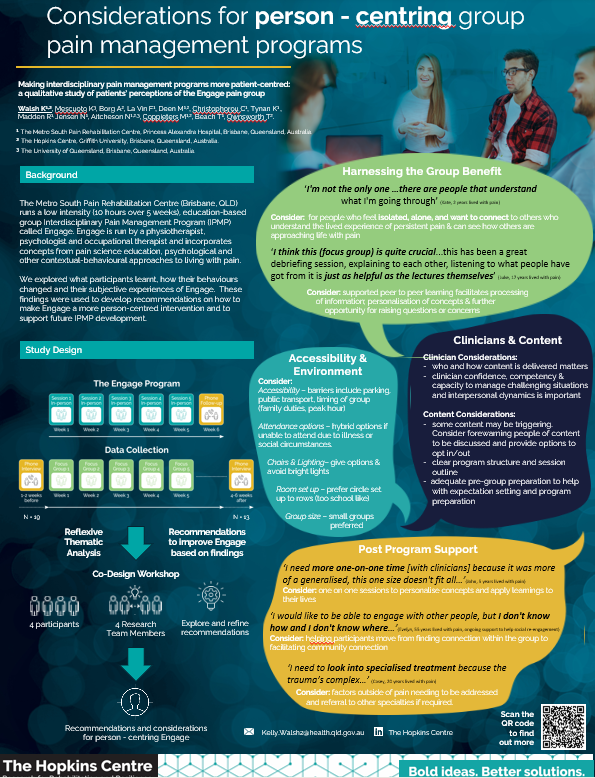
Poster Presentation
Click here to view project poster 'Considerations for person-centreing group pain management programs'.
Project Outcomes
The ENGAGE study has contributed to improvements in research, clinical practice and knowledge translation. Research-informed changes to the design and delivery of ENGAGE include
- Changes to Allied Health Pathways – The CONNECT group was established in response to participants feeling isolated and alone in their pain experience. Participants attend CONNECT after seeing the pain specialist and before seeing Allied Health. After attending CONNECT, participants choose the pathway that best fits their pain rehabilitation needs, helping to foster greater autonomy.
- Improved Pre-Engage preparation for participants. A new information sheet provides a clear overview of the program structure and session outline. A Pre-Engage phone consultation helps to set expectations, offer further detail about the purpose and content of Engage, and address any questions participants may have.
- Post Engage session “coffee and chat”, facilitated by a nurse at MSPRC. This initiative was introduced in response to research participants expressing that the Focus Group component was just as valuable as the program itself. Feedback has been consistently positive, with participants appreciating the opportunity to further explore concepts discussed during the group. The session also provides a supportive platform where participants can learn from one another, share experiences, and offer mutual encouragement.
- Redesign of Engage content to prioritise the elements participants identified as most beneficial. In addition, we have adopted a more trauma aware approach to how sessions are delivered.
- Hybrid options for selected groups to address access issues related to participants' location, timing, or illness. These currently include the sleep group and the flare up workshop. This is also being looked at for some Engage sessions if participants are unable to make it in person.
- Post-Engage groups. Several new groups have been established, including tai chi, yoga, flare-up workshop, sleep group and a psychological skills short course. Together, these aim to build on concepts introduced during Engage and provide continued support as participants implement the skills they have learned.
- Community Immersion Activity. MSPRC now offer 2–4 community immersion activities each year. Each activity involves two MSPRC clinicians meeting participants at public-transport–accessible locations, such as GOMA. Participants are assisted in navigating barriers to attending, such as catching public transport.
- Clinician Impact. The Engage research project has given us valuable insight into our patient cohort, elements of the group that can be strengthened and how we, as clinicians, can better facilitate outcomes. We have become more understanding of the challenges our patients face and have been more proactive in providing post program support to patients completing Engage (either individual or groups).
Conference presentations
Project findings have been shared nationally through presentations at professional conferences, including the Australian Pain Society Annual Scientific Meeting, helping translate research findings into broader clinical practice.
Foundation for future research
The project has established a strong evidence base for future research exploring patient learning, behaviour change, mechanisms of change within interdisciplinary pain management programs, and the role of person-centred care in improving rehabilitation outcomes.
