

New publication explores how mobile app technology can support pressure injury identification after spinal cord injury
A new publication from The Hopkins Centre is exploring how smartphone technology could support people with spinal cord injury (SCI) to manage pressure injuries in the community.
Pressure injuries are a common and potentially serious secondary complication following SCI. They can have significant impacts on physical health, wellbeing, and quality of life, and timely identification and management is critical to preventing complications.
The new study, “Pressure injuries for people with a spinal cord injury: exploring lived experience and identifying preferences for assistive mobile application technologies for community management”, explores the lived experiences of people with SCI and their perspectives on the potential role of smartphone applications in supporting pressure injury self-management. 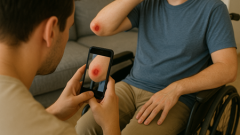
Published in Disability and Rehabilitation: Assistive Technology, the research highlights the importance of understanding the needs, experiences, and preferences of people with SCI when developing new technologies designed to support their health and care.
From lived experience to technology development
The publication is an outcome of The Hopkins Centre Seed Grant project, “Using an Artificial Intelligence-based Algorithm to Assist Pressure Ulcer Identification and Staging for People with Spinal Cord Injury”, led by Hopkins Centre researcher Dr Jayke Bennett.
The interdisciplinary project is investigating the potential of image recognition technology and artificial intelligence (AI) to help identify and stage pressure injuries using photographs of the wound site.
A key long-term aim is to translate this technology into a smartphone application that could support earlier identification of pressure injuries, particularly for people living in the community who may experience barriers to accessing specialist healthcare services.
The project brings together researchers, clinicians and community partners, including the Queensland Spinal Cord Injuries Service (QSCIS) and Spinal Life Australia (SLA), to ensure the technology is informed by clinical expertise and the experiences of people living with SCI.
Putting people at the centre of technology design
As healthcare technologies continue to evolve, understanding how they may fit into people’s everyday lives is essential. This research provides valuable insight into the experiences of people living with SCI and their preferences for mobile technologies that could support pressure injury management. These perspectives will help inform the ongoing development of technology that is practical, accessible, and responsive to the needs of the people it is intended to support.
While further development and evaluation are needed, the research represents an important step towards exploring how AI and mobile technology could support people with SCI to identify potential pressure injuries earlier and access appropriate care.
Publication
Bennett, J., Walker, J., Gustafsson, L., et al. (2026). Pressure injuries for people with a spinal cord injury: exploring lived experience and identifying preferences for assistive mobile application technologies for community management. Disability and Rehabilitation. https://doi.org/10.1080/17483107.2026.2728604
For more information about the research project, visit The Hopkins Centre's Using an Artificial Intelligence-based Algorithm to Assist Pressure Ulcer Identification and Staging for People with Spinal Cord Injury project page.
Tags: Pressure Injury, Spinal Cord Injury, SCI, Technology, App
Related Articles
- World-leading centre for rehabilitation and disability research opens
- Making breathing easier for patients with acute spinal cord injury
- Singing as a form of rehabilitation
- Dr Dinesh Palipana on adapting new technology to personalise medicine
- Meet and Mingle - research expose and virtual reality experience
